Training
Running in Hot, Humid, and Chaotic Cities: Ultimate Survival Guide
Running in hot, humid and chaotic high-traffic places is a challenge. But it's not impossible to run in such places, and in some ways, it may be a fun challenge that can improve your running capabilities.
January 6th, 2026
Delhi Half Marathon, Feb 2025
Running in the “Western world” is generally easy-going. Places like the US, Europe and Australia/NZ offer mild climates, minimal and calm traffic and accessible infrastructure, such as footpaths and running trails.
But in many countries and cities in the world, running is far from easy.
Runners in many parts of Asia, Africa, and South America, as well as some isolated islands, often have to contend with intense heat and humidity, chaotic traffic (including vehicles, pedestrians, and animals), and minimal infrastructure.
I spent months travelling India, and lived in South East Asia for almost a year — marathoning training most of the time, and the experiences have left a strong impression. I invariably finished any run dripping with sweat, I’d been chased by wild dogs that roam the streets in some areas, and the traffic in most cities is chaotic and unpredictable.
If you’re in such a place, whether you’re visiting or living there, running may feel impossible. But that’s not true.
Speaking from personal experience, running in places like this is absolutely more difficult, but it is NOT impossible.
Not only that, it could be beneficial. Running in these conditions is character-building and, like altitude training, it may even make you a physiologically better runner than running in more “favourable” conditions.
Drawing from my aforementioned travel experiences, I’ve put together this mini-guide. We’ll explore why you should still run in places like this, and give some practical tips on how to do so.
Why You SHOULD Run In Hot, Humid and Chaotic Environments
To some, this is likely a hot take (literally), but I think there are benefits to running in hot and humid environments that are perhaps a little more chaotic — as long as you stay aware and cautious (which I talk about later).
I found running in the chaos exhilarating. Running along rickshaws in Delhi, or through the chaos of Jakarta, is all about keeping your attention focused. Trail runners are often drawn to the trails for the variety they offer, and the same applies when running through urban chaos — it keeps things interesting.
It’s a character-building experience, for sure. It builds grit and resilience, forcing you out of your comfort zone. This (in my experience, at least) feeds into other aspects of your life, making you a more robust person.
From a physiological perspective, if it’s hot, you’re undergoing heat adaptation. This has been shown to improve running performance. It’s beneficial to run in such hot and humid environments, even when the sun is down. It’s about the ambient temperature, NOT exposure to the direct sun.
This process will make you a faster, more efficient runner, and is well worth considering. We’ve wrote a whole separate article on this subject if you want to learn more.
Safety First
There’s no doubt about it: running in these environments can be risky. There’s often no pavement/sidewalk, the traffic is unpredictable, and the heat can be brutal.
I’ve been burnt by motorbike exhausts, chased by dogs, and bed-bound for days after an episode of heat stroke. Each of these experiences taught me a lesson.
Though I’ve made mistakes, I now realise that with proper mitigation and awareness, many of these risks can be lessened or avoided entirely. Here are some pointers.
#1: Stay Alert
Dangers that you wouldn’t think about in the West are all over: traffic, stray dogs (more on that later), motorbikes, the heat, etc. It’s essential that you simply stay alert.
Most of us operate on “autopilot” in the West. That’s okay if you’re in Europe or the US because in such places, things are generally predictable: cars follow the lanes and stop at red lights; footpaths are usually clear and continuous, etc.
In places like Southeast Asia or India, this isn’t so.
You must stay alert at all times. A few things to consider:
Run against the traffic so that you can see the vehicles coming*.
Listening to music is possible, but may impair your awareness of car horns, dogs**, etc. I’d recommend bone-conductor headphones, such as Shokz Open Run Pro 2 headphones, which let you maintain awareness and listen to music/podcasts/whatever at the same time.
#2: Start Early (Or Late)
If the heat and humidity are intense, running in the middle of the day can be painful, challenging, or potentially dangerous.
With that in mind, you’re best running before the sun rises or after the sunsets wherever possible.
#3: Max Out Sun Protection
In situations where running during the morning or evening isn’t possible for whatever reasons (for example, you don’t feel safe running in the dark), make sure you maximise sun protection:
Wear shirts with long sleeves (or dedicated arm sleeves) and trousers or leggings to keep your skin covered.
Wear a cap (perhaps with a Japanese-style neck cover) and sunglasses.
Lather the remaining exposed skin with suncream.
#4: Hydrate — Before, During and After
Never underestimate the importance of hydration. If it’s hot and humid, even if you’re running early or late, there’s a high chance of dehydration.
While drinking water is great, in these conditions, you may need to bring out the big guns — electrolyte drinks.
While travelling Southeast Asia, I noticed that isotonic drinks such as 100plus, Pocari Sweat and powdered electrolyte sachets are much more commonplace in Thailand or Malaysia than they are in Europe.
And for good reason! If the average person in SEA needs these drinks, imagine how important they are for athletes.
Electrolytes are essential not only for rehydrating but for retaining water, too. Drink plenty before, during and after runs.

Pocari Sweat in a vending machine, Japan
You don’t even need to carry a drink with you. If you need to stop mid-run and purchase a drink to rehydrate, it is better to do that than to try and push through your session, hydrating at the end, and potentially causing damage to yourself.
#5: Be Prepared For Animals
Where I grew up in England, the only animal I’d need to worry about was a drunken Geordie stumbling home from the pub at 2am.
In other parts of the world, there are other (less fearsome, but still dangerous) animals to worry about — in my experience, mainly monkeys and dogs.
I never figured out a perfect way to deal with these animals when I encountered them.
But I did figure out some strategies that were relatively effective.
My first piece of advice is, whenever you can, simply try and avoid them — if you see wild dogs or monkeys, turn around and find another route.
With dogs specifically, I often found that they had a particular area marked and would essentially stay within those boundaries. If you entered their “boundary” and they followed you, they would only follow you so far before turning back.
If you do see a dog and you’re already near it, do not stop to turn around. Keep running. Often, they will only get up and pay attention to you if you stop. If you keep moving, generally, they will not register your existence.
If a dog does chase you, you will NOT outrun it. Instead, you need to get up high, or over a boundary that it cannot cross (such as a large wall). You can also pretend to pick up a rock and look as though you’ll throw it, or wield a big stick. This often keeps them at bay.
Screaming for help is never a bad idea, too. I’ve honestly lost count of how many times I’ve had a local on a motorbike come by and let me ride, or at least helped me scare away the animals.
Finding Where to Run
Once you’ve got the safety basics down, the next question is choosing where to run. Naturally, some spots are better than others. Sometimes you’ll be running on a huge, unpopulated boulevard, other times alongside the motorway.
The question is, how do you find the best spots to run in?
Strava Heatmaps is a good starting point. This tool shows you the areas that are most frequently run in, and often for good reason. See where people in your area are running, and try them out.
If that’s not an option, look for some of the following on Google Maps:
Running tracks.
New-build housing estates or gated communities (the more expensive, the better).
Administrative centres (these places are often well-invested in, don’t have many people around and have large footpaths and/or green spaces).
University campuses.
Army areas (weirdly, this is a thing and especially so in India).
Expat areas.
Spots with wide boulevards.
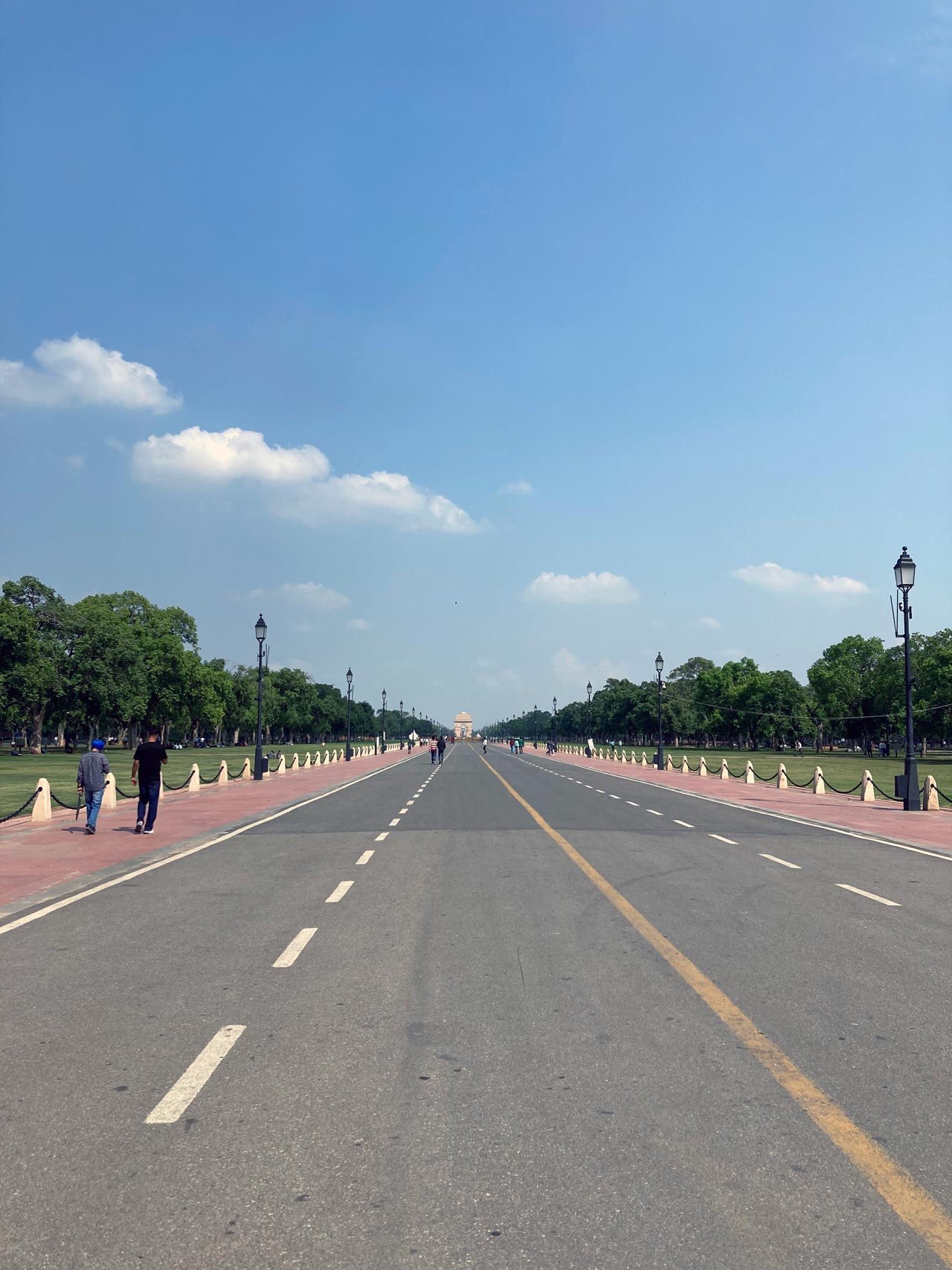
India Gate, a very runnable area by South Asian standards
As a general rule of thumb, the more expensive, governmental or official it is, the more accessible it will be for running.
The Treadmill Is Your Friend
In some places, though, you simply have to accept that there are no good spots for running. While well-planned major cities like Singapore, Hanoi or Bangkok offer green space and good running infrastructure, other cities don’t. And you’ll often be hard-pressed to find good running spots in the countryside or smaller towns and cities.
While you can accept your fate and run anyway, or take a rest day, there is a third option.
The treadmill has a bad reputation, but it’s situations like this when it shines.
When your only option for running is alongside the motorway (a situation I’ve often found myself in), a treadmill offers safety and comfort. The treadmill isn’t much fun, but it won’t kill you (unless you die of boredom, of course).
The treadmill may also be an option if you’re doing speedwork. Heat and humidity impair your ability to run at your best, and so if you want to execute a workout properly, you may want to do it indoors where the environment and/or elements won’t hold you back.
Other Practical Tips
A few other things you might want to consider when running in hot, humid or chaotic environments.
For chaotic environments:
Carry cash for electrolyte drinks and/or a taxi.
Wear light and reflective gear when possible.
Learning phrases or having Google Translate in the local language ready can help (you can also download the language if internet access is flaky or unavailable).
Carry a paper card with you (in the back of your phone, for instance) with emergency contact information and your blood type written on it. This is in case something does happen. Many phones offer this feature, too, but your phone may end up damaged if you are in an emergency.
Running in chaos isn’t for everyone, but it does have some benefits. If you have to do it, make sure you do it safely and responsibly — and have fun doing so.
Footnotes
*Ironically, while the traffic is more chaotic in these places, you are, in my opinion, actually less likely to be in danger from traffic. Traffic consists mainly of motorbikes and rickshaws, which are nimble enough to avoid you. Most of the time, they can’t go fast enough to hurt you due to the traffic and chaos. And because of the chaos, most drivers operate with high awareness and will react to you, whereas in the West, most drivers operate on assumptions and rules (any thus text and drive, and so on).
**I once had headphones while running in Thailand. I had no awareness around me. I randomly checked behind me and noticed a dog ready to bike at my ankles. Needless to say, I freaked out, and a comical episode of me trying to bat this dog away ensued.